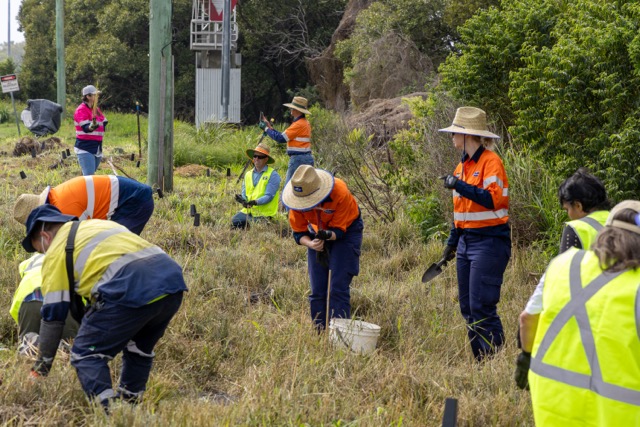
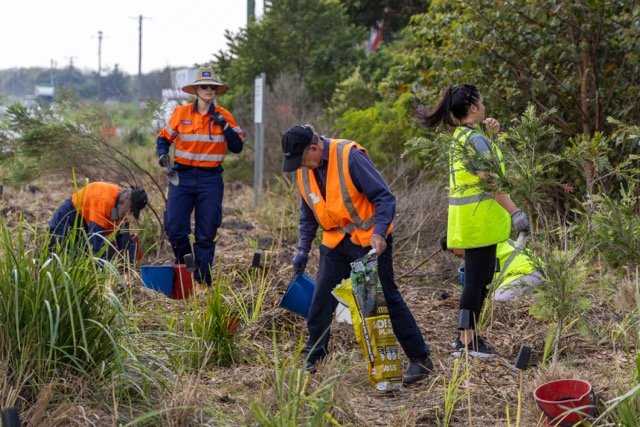
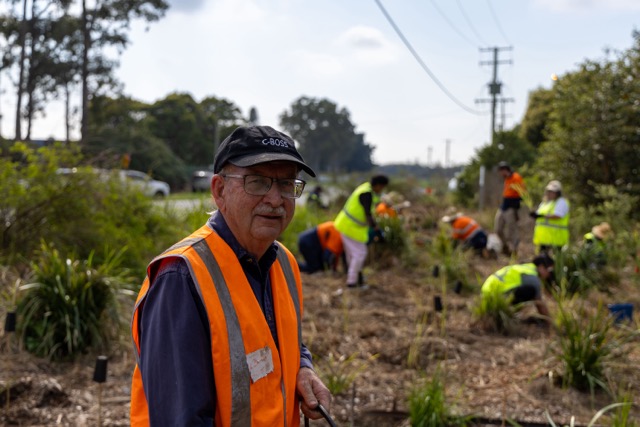
A big thank you to all our Industrial Landcare partners who participated in today’s clean-up event and those who joined us for the recent Gibson Island Industrial Landcare Planting on Tuesday, 27th August. During the planting, we successfully introduced 470 new plants, helping to restore critical riparian land. This effort was made possible through a grant from the Department of Environment and Science (DES) and the generous support of our long-time partners, Visy. We are especially grateful to Visy for their ongoing commitment, which has been instrumental in keeping the project on track throughout 2024.
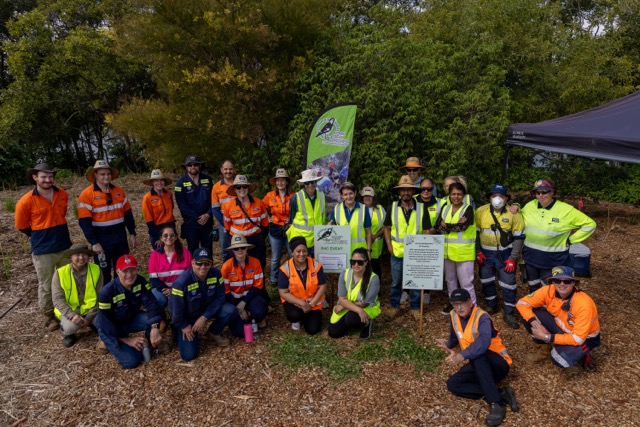
Today’s clean-up event was proudly funded by the Queensland Department of Environment and Science’s Community Sustainability Action grants: Litter and Marine Debris Clean Up and Prevention.
A big shout out to Brisbane Airport Corporation for their generous support of B4C through the Containers for Change program! Thanks to their donation, we were able to provide high-visibility vests for our volunteers, enhancing safety during our activities and ensuring a safer environment for everyone involved.
What We’ve Achieved Since 2018
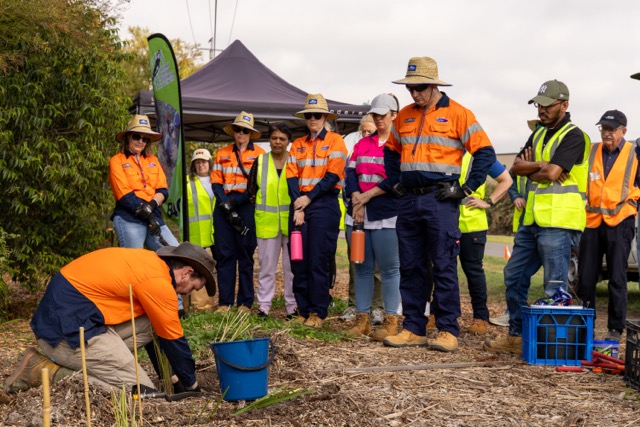
Since the Gibson Island Project began in 2018, we’ve made significant strides in rehabilitating the area:
- Total area rehabilitated: 3.5 hectares
- Length of restored land along Paringa Road: 1.3 km
- Events held: 30
- Total plants installed: 10,993
- Volunteer hours contributed: 3,265
- Number of participants: 1,504
Birdlife Survey Report: April 2024
Birdlife Southern Queensland has been conducting quarterly bird surveys to monitor the success of our rehabilitation efforts. These surveys help us track changes in bird species and numbers, offering a clear measure of our progress.
The latest report indicates that our efforts have increased the number of smaller bird species in the area, but we are still facing challenges with larger, more dominant species. Notably, we’ve seen a rise in White Ibis, Torresian Crows, and Common Mynas, which have affected the overall balance of birdlife.
Despite these challenges, we are encouraged by the continued presence and growth in numbers of smaller bird species. The survey from May 2024 showed the following:
- Superb Fairy Wren: 10
- Brown Honeyeater: 4
- Silvereye: 8 (the highest number ever recorded)
- Double-barred Finch: 8 (the highest number ever recorded)
- Grey Fantail: 3 (the highest number ever recorded)
We are also pleased to note the absence of the Noisy Miner, a particularly disruptive species, which has not been recorded since 2023.
Looking Ahead
Although we continue to manage an increased presence of crows and ibis, and a moderate number of Common Mynas, our habitat-building efforts are showing promise. With steady increases in smaller bird species, we believe we are on the right path to restoring balance to the ecosystem at Gibson Island.
We look forward to seeing even more progress in the months to come and hope to welcome many of you at our next planting event on Tuesday, 29th October.